Wednesday, February 20, 2013

Dinner in the diner....

...nothing can be finer.

A line from "Chattanooga Choo-choo", but it's true.  If you've never eaten a meal on a train in a dining car, you're missing out on a unique experience.

Once upon a time, it was a staple of train travel.  But, as long distance train travel has become a novelty, so has "dinner in the diner".  Most people have never experienced it.

Dinner trains and tourist trains.  


Just about every tourist rail line has a dining experience.  Some have full dinner trains where you ride just to have a meal.  Some have a dining car where you can have lunch during the regular trip.  It's fun.  The scenery goes by, usually slowly - most tourist lines don't exceed 25 mph.  The food is good - usually provided by a local restaurant and delivered to the train just before departure.  But, the emphasis is on the "Dinner" part and not the "Train" part. This is first and foremost a dining or tourist experience - not transportation.

It's nice, but everyone you meet is there for the same reason you are.  Fun and food - and that's it.  Not that that's bad - there are some really terrific ones out there.  Take a look at the Napa Valley Wine train or the Rocky Mountaineer for example.  (Both on my "to do" list!) They are first-rate and then some, but still a very homogeneous experience.

The Amtrak experience.  


Amtrak operates a skeletal network of  trains that cover long distances on overnight journeys.  These are the last remnant of the trains that used to blanket the country before it was common to fly or drive long distances.  They have sleeping cars with small bedrooms, a lounge car for snacks and sightseeing and a dining car.

The railroads tried hard to hang onto the long distance traveler  Here's an old Santa Fe news reel ad for the Super Chief.


The Santa Fe and other roads were fighting a losing battle.  The airplane siphoned off the lucrative business traveler and the highway got the rest.  Most of these trains disappeared in the 1950s and 60s.  The best of the remnant were saved by Amtrak in 1971 and most continue to this day.

The Amtrak long distance trains aren't much different from the Super Chief (stay calm, my railfan friends...)  They all carry coaches - there are no more "all first class" trains today, and the level of luxury is a bit lower.  There are only roomettes and bedrooms to choose from and there is no barbershop (not sure I'd want a haircut on a moving vehicle, anyway!).  In fact, Amtrak's Southwest Limited covers nearly the same route every day.  It takes 43:15 instead of 39:45, though as there are a few more stops and more freight traffic on the route.  But, they all have full service dining cars.

The route of the Southwest Chief crowed with freight trains (2004)


When you travel by car, you are in your own cocoon and don't have to interact with anyone along the way at any kind of personal level.  Even when you stop for meals, you might talk to your server a bit, but other than that, you are in your own world at your own table.

You won't starve, but you won't meet anyone.


When you fly, even though you are packed into an aluminum tube at maximum density, it's rare that people chat with the strangers next to them all that much.  Flights are usually quick.  The attitude is "lets get this over with!" The seating arrangement already imposes on your personal space - trying to maintain what's left of it takes some effort.  And, it's loud.  And, there aren't any readily available conversation starters. So, you sit there and read your book and listen to your iPod.  On international flights, you still get "food" - delivered to your already overcroweded space.  Try not to drop you coffee on anyone!  (It makes them mad.  I found this out once.)

Meh...

The train is different.  You are on for a long time, you have some space and there is an element of shared experience.  Long distance train travel is not a common occurrence for most people.

Amtrak's Empire Builder (April 1973)

The dining car is not quite like going to a restaurant.  You do wait to be seated, just like a restaurant, but since space is at a premium on a train, you are likely will be seated at a table with other people.  This is a good thing!  Unless you are planning to spend your meal time staring at your iPhone, it is very likely that you will wind up talking to those other people at your table. It would be rude, not to!

The most common first question is "Where are you headed?" followed by, "Where did you get on?" and "why are you travelling?"  That's just the start.  Usually, you spend almost as much time chatting as you do chewing.

Who will you be sitting with?  Typically, the diner draws more patrons from the sleepers than the coaches.  You'll find senior citizens travelling for fun, vacationers, people from the small towns en route that don't have nearby airports, students, aero-phobes, railfans and people who just wanted to try the train for the experience.  Pretty much a good cross section of the US.

Lounge car people on the California Zephyr (May 2006)


The other attraction of eating in the dining car is that the view out the window is constantly changing.  Sometimes, it's astonishingly stunning, rolling along a river valley, through a gorge or over a snow-capped mountain range.  Sometimes, it's the forgotten side of a dirty, old town.  But, it's all part of the trip.  You can't ride one of these trains without becoming more wise about the US and it's people.

Rolling through Nevada (May 2006)


The menu is more limited than a restaurant, typically a half dozen or so choices, but much of it is prepared on the train in the kitchen of the dining car.  Fine cuisine?  No.  A decent meal?  Yes.  And, the price is reasonable.

Amtrak meal (photo from http://www.railpac.org)

Uh, oh.


Which brings us to the future.  The price of the food is reasonable.  The cost to deliver it to your table is not.  Amtrak loses a bundle of money on their long distance trains.  A lot of it is in the food service area.  Not only does that dining car take up space on the train and fuel to haul it around, the cook and dining car attendants live on the train and need their own sleeping space - usually part of a sleeping car - which is the most valuable space on the train.  Plus, you need to stock the train at the beginning of each run. In the whole, it is a very labor and cost intensive operation.

Somewhere down the line, push will come to shove and Amtrak will be either drop a lot of their long distance trains or have to modify the service quite a bit.  The dining car as it has historically existed, may be a casualty.

So, if you want an unique experience, get it while you still can.  You might even consider a out-and-back day trip on a long distance train, just so you can try the dining car.

I could take the Crescent to Birmingham and back.  Breakfast on the way out. Dinner on the way back. Hmmmm...


Wednesday, February 13, 2013

A frequently asked question...part 2

In Part 1, we answered the question  "Why don't we have trains like they do in Europe and Japan?"

The quick answer is that it is really the wrong question to be asking.  The right question is, "Do trains have a place in US, and if so, what should we be doing about it?"

Here's what!

1. Fix Amtrak:  There has been lots of talk over the years about "privatizing Amtrak".  Baloney!  It's all just hot air!  Amtrak is what we have.  It is what the freight RRs are comfortable with.  There is no palatable political path forward that doesn't include Amtrak.  So, the first step is to improve Amtrak.


What trains do best.  Batch mode transportation!  NEC train on Wednesday before Thanksgiving.


Define the mission.  Push them out of their cave and shine a light into the dark corners. Benchmark.  Depoliticize.  Outsource.  


Amtrak started in 1971 and really just supervised the trains still being run by the existing railroads.  That slowly changed.  Over the years Amtrak took over the actual operation of the trains, maintenance of the equipment, ownership of the large stations and most of the track between Boston and Washington DC (the NEC - NorthEast Corridor).  The original employees are now almost all retired.  Amtrak's employees are largely those who started their career with Amtrak.  


The National Limited from Kansas City to Washington DC.  Three cars. Why bother?

What this means is Amtrak has lost it's connection with the railroads that host its trains.  It's also become ingrown and isolated.

For much of it's history, Amtrak has had no secure source of funding and has had to fight year to year to get enough subsidy to survive.  This has shaped their corporate culture to the point where they believe that's what they are in business for:  to run the same trains they ran yesterday and collect a subsidy for it.  They don't question where their trains go and why they are running them.  They don't question the manner and method of running them.  They don't question how they fit into an ever-changing national demand for transportation.  This is particularly true of the once-a-day long distance trains that traverse the country.


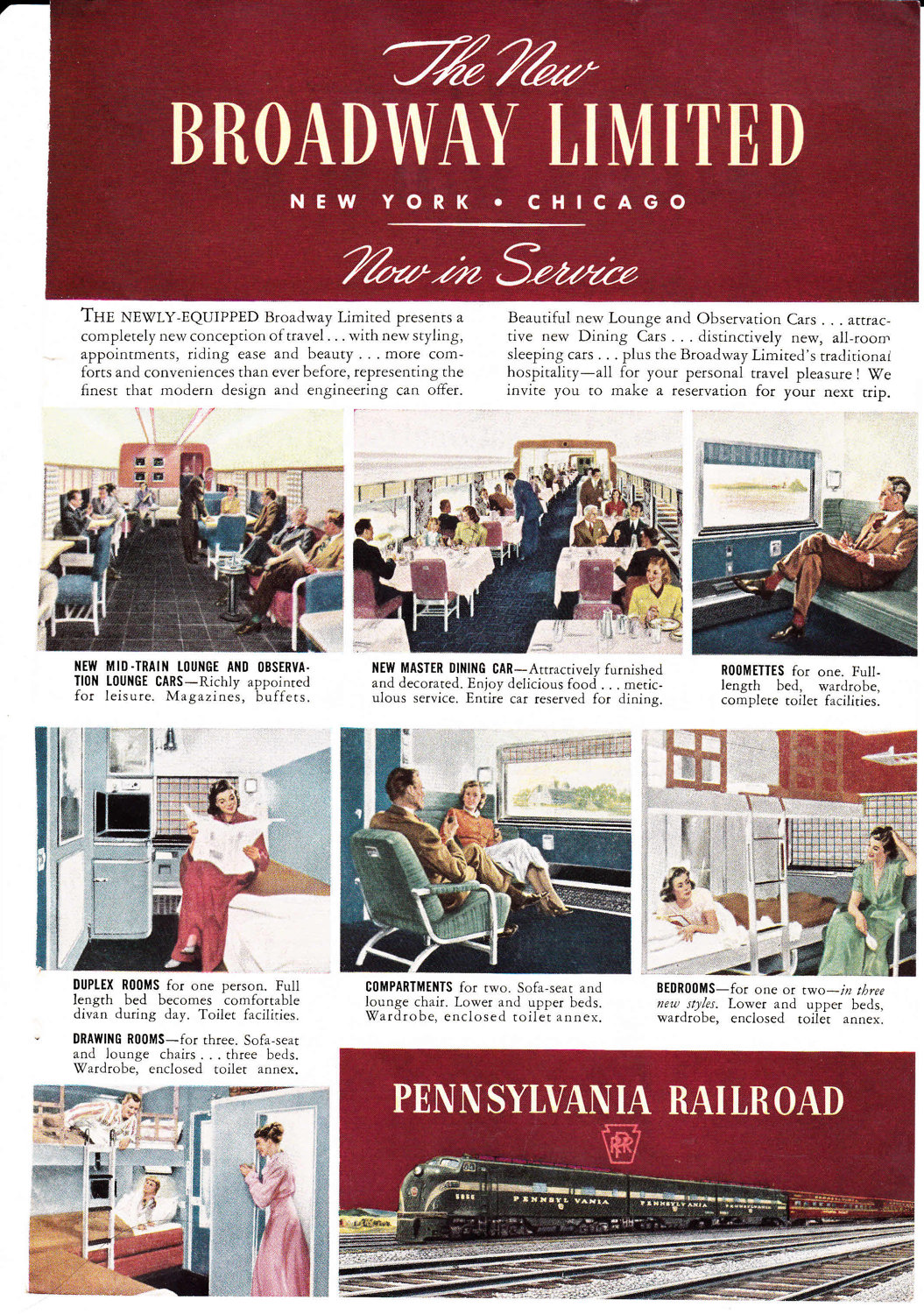
Headed to Chicago...eventually.  The Broadway Limited in Bristol PA shortly before it's demise.
This is no way to run a railroad.  

The first step for fixing Amtrak is to define the mission.  What is Amtrak supposed to be?  Something like: "Amtrak's mission is to be a vital, cost-effective portion of the United States' intercity transportation network, constantly seeking to enter and serve markets well suited for passenger rail travel and to continuously seek to improve their performance in those markets."

Second step is to de-politicize Amtrak.  Amtrak's board is appointed by the US President.  Consequently, Amtrak's focus and short term goals are often dictated by the political whims of the party in power.  Amtrak also has to work Capitol Hill every year to see how much money they will have to work with the following year.  No real business can operate this way.  


"Boutique Service"  What trains do poorly.  Once a day, short train. The Pennsylvanian snakes it's way over the Susquehanna River on the way from Pittsburgh to Philadelphia.


Change the board so that there are fixed terms that are long and non-integral with election cycles - say 7 years.  Stagger them.  Replacements get nominated by the existing board and can be approved by the President and/or the Senate.  This will help control the micro-management by politicians.

Change the funding cycle.  Go to rolling 7 year cycles.  Define the operating subsidy in terms of farebox recovery.  Dole out capital in steady chunks.  Let Amtrak figure out how to spend it to best effect.  This allows Amtrak to think in terms of markets rather than trains and gives them funding to make changes.

Change the internal culture.  Set financial and operational goals.  Farebox recovery.  Ridership.  Trains operated on time.  Customer satisfaction.  Start rewarding all the employees when the company makes goals.  Get everyone thinking about costs and service everyday.  Remove rewards for "empire building".  This should help control costs, improve service and properly position the company.

Benchmark every facet of the operations.  Amtrak is a passenger railroad so benchmark against other passenger railroads in the world.  Most of these are government owned, but don't stop there.

Amtrak has functions very similar to the freight railroads - locomotive maintenance, car repair, train operations, crew dispatching.  Benchmark against the US freight railroads.  They have some functions similar to airlines - scheduled network operations, ticketing, baggage handling, etc.  Benchmark against the world's airlines.

Amtrak is also a hotel and a food service company, so benchmark hotel chains, restaurant chains, cruise ship lines and ferry operators just for starters.

Then there are the regular G&A functions that Amtrak shares with every other company in existence.  Get a management consultant to provide benchmarks in these areas.

Take the benchmarking results and figure out what functions to keep and focus on and what can be outsourced or sub-contracted.  How about Darden food on the trains?  How about roomettes by Hilton or Marriott? This will create a much leaner Amtrak, focused on core competencies, one of which will most likely be performance contract administration.     

2. Focus on what works.  

What are they doing right now that seems to work?  


Amtrak borrowed this train from Sweden.  It lead to Amtrak's successful Acela trainsets.


The NEC.  For a whole bunch of reasons, the NEC performs pretty well.  Amtrak seems to understand the market and provides service to fit. Amtrak also seems to have an operational culture that is focused on providing reliable, dependable service.  Amtrak has name recognition, farebox recovery greater than 100% (an actual profit -  before accounting for capital expenses) and a pretty good reputation.  Spread this joy around.  It's already worked on the new train to Lynchburg VA, the new train to Norfolk VA, the extra train to Richmond VA, service to Harrisburg PA and it's about to on the Springfield MA branch.  Keep it up!


Slow, diesel hauled trains are now fast electric trains.  Ridership has doubled.
How about those state partnerships?  California and North Carolina are the best examples.  Corridor focus with frequent service layered in a bit at a time.  Decent performance with a plan for growth.

Are there more places in the US that can benefit from these approaches?  You bet.  Florida is the fourth largest state with big destination cities in the 100-300 mile "sweet spot" for passenger rail service.  The Piedmont in the Carolinas and Georgia.  The near mid-west out of Chicago.  The Texas Traingle.  

So, let's get going.  Amtrak has locomotives and cars. Abandon the legacy train service and move into the present!  Deploy the existing equipment to best advantage.  Grow from there.


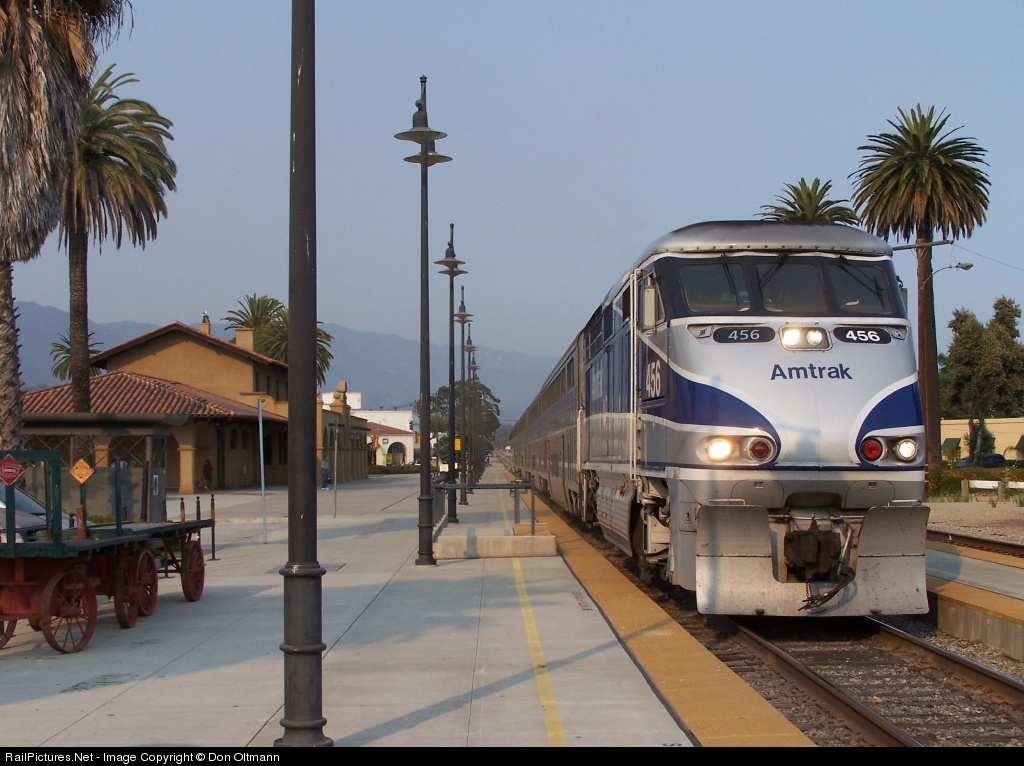
Amtrak California Surfliner at Santa Barbara.  Crowded freeway + lightly used freight line = success!


3. Fit into the highway/air network.  

Let's face it.  We drive everywhere.  If it's too far, we fly.  It's how we've been raised.  Our whole society is organized around driving.  We came out of World War II in one piece with money in our pockets.  We bought cars and houses in the suburbs.  Drove to work.  Work moved into the suburbs, too.  Office parks.  Free parking!  

The government built highways.  We want them to.  We wanted good roads to drive on.  There was lots of oil in Texas.  Refining techniques got better and better.  Gas was cheap. (still is!) Life was good.

All those pilots came back from the war.  Airbases were everywhere with no work to do.  Thousand of Army Air Corp  C-41 were lying around with nothing to do.  They were really just DC-3s, so put seats in them, convert the airbases and put the pilots to work.  It was a big jump start for commercial aviation.  You could fly from NY to Chicago in the morning, attend a meeting, and fly home in the evening!  Sure beat two nights on the train, away from the family.

Living the American Dream!  

Lost in the shuffle were the railroads.  In the post-war era, they saw the pent up demand for travel and spent lavishly on new, fast, shiny trains. Streamliners, they were called.   They were wonderful, but American life was changing fast and they were soon left in the dust.  Trains were "old".  Cars and planes were "new".  The 1950s were future focused.  Chrome and steel.  Space race.  Aluminum Christmas trees, even!  "Progress" is what sold.  "Progress" was what we wanted!  

Cars got better. Smoother. Faster. More powerful. Air conditioned!  The highway network grew and grew.  Planes got faster.  Airports got bigger. Gasoline stayed cheap.  Airline tickets got cheaper.  It was "Progress"!

Except, all that "Progress" came at a cost.  The suburbs sprawled.  The highways got congested.  Airports got crowded.  Flying got scary...and uncomfortable.  The novelty and fun of driving on highways and flying in jets wore off.  It's "old" now.

It appears that we might have been a bit hasty throwing those "old" trains out of the mix. So, where do trains fit in this landscape?  They can't be the "one size fits all" that they were in the late 19th and early 20th century, taking everyone everyplace.  They have to fit into the niches where they work best.  

Those places include:


  • Where highway congestion is terrible
  • Where there is good local options for first and last mile (NYC, Phila, DC, Boston), that is, good transit.
  • Where it is easy to and from get to the train station (suburban P&R)
  • Where there is good connectivity to the air network (Phila, Newark...)
  • Where the air network is congested (LA, NY, Chicago, Atlanta.)
  • Where implementing or improving train service fits easily into the existing rail network (North Carolina and California).
  • Where new/improved train service fits well with the existing network (NEC extensions).


"How" is important.  

Make it visible.  Who would ride a train if they didn't know it was there?  People in the Northeast know about Amtrak.  This really isn't true many other places in the US.  Passenger trains have been gone so long that baby boomers don't even give Amtrak a thought.  

When you are planning a trip and you use a travel web site like Travelocity, Amtrak schedules don't appear, but European train schedules do.  Why not?  This is a simple fix. Amtrak needs to "get on board" with SABRE.     Amtrak schedules DO show up in Google Maps - if you select "transit" as your routing option.  This is good, but not obvious.

Make it seamless.  When you are trying to get from A to B, the last thing you want to do is to have to figure out how, where and when all the piece of your trip fit together, including how much and where to pay for tickets.  

Example:  You want to go from Chicago to Lancaster PA.  If you were "train savvy" you'd know you could fly to Philadelphia, take a SEPTA train to 30th St. Station and then an Amtrak Keystone train to Lancaster.  Can you see this trip at one website?  No.  You have to do the air piece one place, look up the SEPTA piece on their web site (and buy your ticket a the airport on arrival) and the Amtrak piece at their web site, carefully checking schedules along the way to make sure your trip is feasible.


SEPTA shares track with Amtrak, but you can't buy a through ticket

At the very least, Amtrak needs to "code share" with commuter railroads.  That is, integrate schedules and sell through tickets.  The Germans do it on a much more complicated network.  Maybe Amtrak needs to hire the Germans to show them how?  Better yet, code share with the railroads.  One ticket, three "boarding passes" for that Chicago to Lancaster trip.


In Germany, suburban, regional and intercity trains all use the same network.  One reservation/ticket purchase can get you between any two points on the network.
For areas with weak or non-existent suburban transit, how easy is it to get to the train station?   How easy is it to get from the station to your final destination?  Are there even any suburban stops that are convenient?  Is there good, secure parking?  Can you pick up a ZipCar?  Is a car rental agency on call?  Bike rentals, perhaps? Can you cajole a developer into a mixed use development around the train station?

Grow it organically.  Big dreams are good.  Some envision a network of 220 mph trains linking all areas of the country.  That might be a good idea, in the long run.  But, we don't know enough to gamble that kind of money right now.  Dedicated right of way for High Speed Rail (HSR) is very, very expensive.  Nobody in the world except China jumped in and did this from scratch.  Everywhere else HSR exists, it's been on the back of a strong passenger rail network to start with.  Then, rural HSR links were added in, one at a time, best routes first, and a network is slowly emerging.  Along the way, the trains have been shown that they can earn back nearly all the capital it cost to build the lines.

That approach makes good sense here, however, we have quite a bit of "plowing" to do before we will be ready to "plant" much HSR.  There is some "plowing" being done already.  There have been some successful extensions of the NEC using "conventional" (80 mph) trains and speeds.  The most recent is a daily train to Norfolk that is exceeding it's ridership projections by double.  There are "emerging corridors" from Chicago to St. Louis and Detroit where "higher" speeds are being developed (110 mph).  Also, Philadelphia to Harrisburg.  Then there is the California HSR project that started out as dedicated, separated LA to SF route, but now, wisely has been cut back at the ends and integrated into the existing rail network at each end.


Old and slow Chicago to St Louis train.  Not very sucessful!.  This line is presently being upgraded to 110 mph. Speed + frequency = success!


How these projects work out will tell us a lot about how passenger trains can fit into our transportation network, what their costs and benefits are, and guide us to "what's next".

So, in summary:

1. Fix Amtrak - it's easier than starting from scratch.
2. Focus on what works now - not on what used to be.
3. Fit into the air/rail network by making trains visible, making travel seamless, and growing the network organically.


Tuesday, November 27, 2012

A Frequently Asked Question...

"Why don't we have trains like they do in Europe and Japan?"

One of the newer ICE trains arrives Mainz, Germany


Here are the short answers.  All are true, even if they seem mutually exclusive:


  1. We already do.
  2. We do freight and they don't.
  3. We should.
  4. We are not Europe or Japan
  5. We're not ready, yet.
  6. They are too expensive.
  7. Amtrak is "not helpful".


Here are the long answers.  Enter at your own risk.

1. We already do.

We have Acela.  It is basically a French high speed TGV train modified for use in the US.  It runs at a top speed of 150 mph, although that is only part of the route in between Boston and New Haven.  Much of the rest of the route it travels at speeds between 90 and 135 mph.


We've been at this for a while.

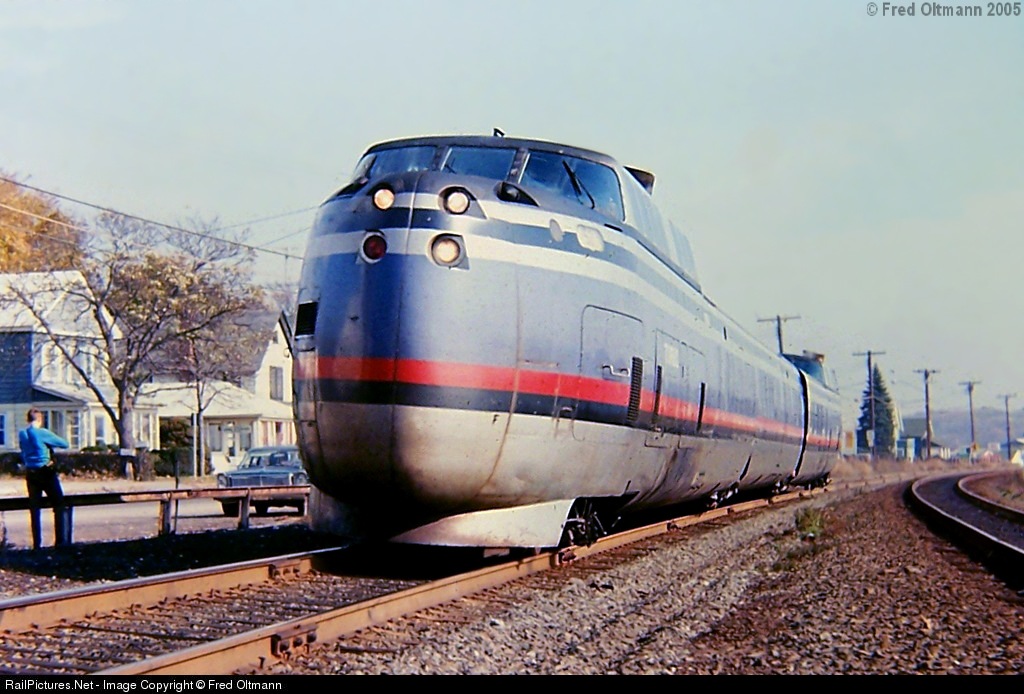
Round 1. We started with Metroliners between New York and Washington and TurboTrains between New York and Boston in 1969.

TurboTrain at Mystic Connecticut
The TurboTrain failed.  The route just wasn't good enough to allow fast service.  There were too many curves along the Connecticut shore and trainsets had reliability issues.  Top speed was only 100 mph in a few places.

The Metroliners succeed, though. They ran at 125 mph, just like the trains the Japanese showed off at the 1963/64 New York World's Fair.  We tried to do it on the cheap.  No new right of way, we just upgraded an existing route, but that route was already fairly straight and fast, thanks to modernization done by the Pennsylvania Railroad during the 1920s and 1930s.  The powerful Metroliner trainsets and other trains on the route soon captured captured a majority share of the air/rail market between NYC and Washington DC.

Original Metroliner train zips through Hamilton Twp. NJ


Round 2.  Early 1980s.  New, better riding equipment, smoother, faster tracks, improved signals. Same route. 125 mph top speed in more places.

Metroliner Service train at Perryville, MD.
Modified Swedish locomotive design with new coaches based on original Metroliner design.


Round 3.  Late 1990s. Extend electrification and raise speeds from New Haven to Boston.  Buy 20 Acela trainsets .  The 20 Acela trainsets account for 1/4 of all of Amtrak's revenue.  Amtrak has majority air/rail market share between Boston and New York and 75% of the market south of New York.

Meanwhile, elsewhere in the United States....not much, with one notable exception.

New York State tried to get into the game, too.  In the mid 1970s, they paid Conrail to upgrade the route from New York City to Albany to allow speeds up to 110 mph.  They also purchased some high speed Turboliner trains of a French design.  Although the Turboliners are now retired, the increased speeds and train frequency remain.
Brand new Turboliner.  Old track structure.

So, we have high speed trains?  Not really.  Our "high speed" trains have fairly low average speeds by world standards.  Even our Acela's top speed of 150 is lower than the typical high speed train in Europe.

Because....


2. We do freight and they don't.

In the US, if it moves more than 500 mile from shipper to consignee, it probably goes by rail.  If it is a bulk commodity, like coal or gravel or grain, it probably moves by rail regardless of the distance. Freight railroading in the US has been a very successful enterprise in the past decade or so.  Profits have been high enough to keep the track in excellent condition and the locomotives and freight cars up to date as well as allow expansion into new markets.  In Europe and Japan, most everything goes by truck or waterway.  Rail carries very little freight by comparison.

This means our routes and tracks are owned, built and maintained for moving freight trains, not passenger trains.  Their routes are government owned and have been optimized for passenger trains.

In Europe, there is a desire to move more freight by rail and less by highway, in part to reduce greenhouse gas emissions. The challenge is how to move freight over a network that has been built out and maintained for passenger trains.  Part of their solution is to replace some of the high capacity links with dedicated high speed routes for passenger trains only, leaving the older, slower routes to regional passenger trains and freight.  The trains that travel these new routes are the ones you always hear about.  The French TGV and Thallys trains.  The German ICE, the Spanish AVE, etc.

These trains and routes have come at great expense.  In most cases, these routes don't return enough direct revenue to pay for their construction (although benefits that accrue elsewhere may make it worth the expense).  In fact, a good chunk of Spain's economic problems come from the huge chunk of change they borrowed to build out their AVE lines.

But what about here?  Can't we shoehorn some passenger trains onto the existing freight routes?  In places, yes.  But, there are a few problems.  Freight trains generally have top speed of 40 to 70 mph and run considerably slower up even shallow grades.  The track needed for freight trains allows high loads but typically won't allow passenger trains to exceed 80 mph.  Indeed, most passenger train routes across the US allow 79 mph passenger train operation.  However, even with that modest differential in speed, it is difficult to operated the passenger train at sustained speeds as it has to make it's way among all the slower freight trains.

If you improve the track for higher speeds, it gets very expensive as the track needs constant "tweaking" to keep in alignment and the speed differential problem gets even worse.  Then, there is the problem of curves.  Many routes have curves that are too sharp for high speed trains to travel around at full speed.  Slowing down and then speeding back up takes quite a bit of time.  Further, the freight railroads get very nervous about passenger trains operating faster than 90 mph on their routes. It's more risk than they are willing to take on.

Typical freight railroad route. Built for tonnage, not speed!


How about building new routes for passenger trains here?  That's a hugely expensive proposition and there are few markets in the US that could show benefits that outweigh the costs.

So, trying to develop a useful network of passenger trains is a costly idea.

Except that....

3. We should.

And, we are, to some extent.  There are places where highway and airport congestion are to the point where we need to add capacity to the network.  In some of those places, it is more cost effective to add rail service than it is to expand an airport or highway.

There are three routes out of Chicago that are seeing improvements in speed and/or frequency.  They are the routes to Detroit, Milwaukee and St. Louis.  These efforts relieve pressure on the highways leading to Chicago as well as congestion at O'hare and Midway airports.  The Detroit and St. Louis routes have recently started increasing speed up to 110 mph.

Departing Chicago


California has been adding service along their southern coast and between the Bay Area, Sacramento and the Central Valley for the past couple decades.  They currently have a partially funded project to build new high speed railroad between LA and SF with construction starting in the next year.

North Carolina has been expanding service between Charlotte and Raleigh to alleviate congestion on I-85.

Virginia has been adding service out of Washington DC to Charlottesville/Lynchburg, Richmond and Norfolk with plans to improve speed and/or frequency on these routes.  They also have plans to rebuild a direct line from Richmond to Raleigh to 110 mph standards.  All of these projects are aimed at congestion on I-95.

New York State has had 90-110 mph service between New York City and Albany/Schenectady for a few decades with plans to improve speed and frequency of service west to Buffalo.

125 mph train on a 79 mph route in upstate NY.  The way forward on improving service on this route is not clear, at present.


Pennsylvania is just finishing up a project that is raising speeds from 80 to 110 mph and increasing the number of trains between Philadelphia and Harrisburg.

And, the most "out of the blue" plan came from a freight railroad, the Florida East Coast, this year.  They are planning new passenger train service on their railroad from Miami to Orlando via Cocoa Beach, with some brand new track from Cocoa Beach to Orlando.  It will operate at 90 mph along the coast and then 125 mph from Cocoa Beach to Orlando.  It will cost them a $1B or two, but they claim it will be profitable!  More here.

The common thread in all these projects is that they have been sponsored by individual states.  With the exception of California's high speed project, the goal of all of these state projects is improvement on existing routes.  None of them are true "High Speed Rail" because....

4. We are not Europe or Japan

In many ways we are different.

The geography is different.  Most people and goods in the US want to move between the interior and the seacoasts - east/west.  Our rivers go north/south as we have mountain ranges in the east and the west.  Europe has great rivers that connect the populations centers.  The result is the rivers do a good job with freight there.


Rhine River traffic in Germany


Population density is different.  Europe has more people per square mile than in the US.  Many more of those people have urban lifestyles than here because.....

Fuel costs more.  A deliberate decision made during reconstruction after WWII.  When you need to rebuild EVERYTHING, you have to choose wisely.  For most of Europe, it was more advantageous to rebuild the cities and railroads than to invest in highways and new suburban construction.  A high fuel tax kept urban areas from sprawl and helped pay for and sustain railway reconstruction.  Highways were built between cities, but generally not through them - high cost!  This further reduced the temptation for people to live in the suburbs.

Railroads move people and freight in big chunks from A to B.  Roads move people one at a time from anywhere to everywhere.

Post war Europe and Japan grew up around expensive fuel, transit and rail networks.  The US grew up around cheap fuel, automobiles and freeways.  You can't build transit and rail networks to effectively move people who have arranged their life around an automobile and freeways any more than you can build roads to carry people whose lives are arranged around transit.  Could you replace the NYC subways with roads and carry the same traffic?  Obviously, not.  Neither can you build an effective rail network to serve a city with low density suburban sprawl.

Outside of the Northeast Corridor (and perhaps, Chicago) - where Boston, New York, Philadelphia and Washington all have thriving cores with great transit, the US just doesn't have a "train culture".  Ask a person in Philadelphia about making a business trip to Washington DC and most will think "should I drive or should I take the train?"  Ask a person in KC about a trip to St. Louis and they will think, "I'll drive.  By the time I drive 20 miles to the airport and get a rental car at the other end, I'll almost be there....and I can leave my shoes on."  The possibility of taking a train won't even enter the equation.  (FYI, there are two trains a day in each direction between KC and StL and one from KC to Chicago.)

There is some amount of "if you build it, they will come", though.  It's how we got to where we are now.  We build roads from the cities into the farmland and suburbs sprouted.  US cities that have added transit to accommodate growth have found that people will arrange their lives around it and higher population density results.  Washington DC is a great example of this.

Parts of the US are becoming more "European like" with their reliance on transit to accommodate growth and trend toward urban living.  Even the most sprawled-out metro areas in the US like Atlanta, Dallas, Los Angeles and Denver have shown a trend toward transit and more urban living.

So, why not start building High Speed Rail?  It's because....

5. We're not ready, yet.  You have to crawl before you can walk.

Europe and Japan started their HSR programs as the next logical step in improving conventional passenger rail travel.  They already had great networks of local, regional and inter-city trains.  Most US cities do not have urban core supported by transit and commuter rail necessary to support intercity trains.  The US needs to build out transit and commuter rail networks as the first step toward improved intercity rail service.

Even as this is going on, some places are starting on the path of intercity rail travel.  (see #3 above).  Most of the work involves extensions from Amtrak's successful Northeast Corridor line.   All are "conventional" rail service with to speeds from 80 to 110 mph.  This is how the rail network grew in Europe.  Build out the conventional network, gain ridership, then upgrade the high density routes with High Speed Rail links.

We should follow Europe's example because building true, High Speed Rail lines are....

6.  (They are) too expensive.

Trains are expensive vehicles.  High Speed trains are very expensive vehicles.  110 mph rail routes are expensive to build and maintain.   Dedicated High Speed Rail routes are very expensive.  In Europe and Japan, they have the advantage of being able to mix types of traffic on the congested urban portion of the routes.  The high speed trains can share the track with the suburban trains and freight trains and use the same train stations.    This is a good thing for them.  It saves having to build much new track in urban areas where land and construction costs are high.

German ICE train in Hamburg trainshed.  Train shares the station and track with regional and suburban trains.


In the US, we are prevented from mixing traffic by safety rules designed around maintaining crash-worthiness of passenger trains that might collide with our very heavy and long freight trains.  Part of the reason that the Acela trains have had some teething problems, need two locomotives per train and can only go 150 mph instead of 190 mph is that they are built big, strong and heavy to allow mixing with freight and commuter trains.

Amtrak train stops in Altoona PA while 135 car coal train passes.


So, if we want a High Speed Rail route in the US, we have to shoulder the cost and complete the whole route - end to end - including lots of expensive urban right of way and track - before we can even turn a wheel.  We can't just add a rural leg here and there and tie it into the rest of the rail network as we go, like they are doing in Germany and France.

Then, there are the trains themselves.  A passenger car costs between $2M and $3M each.  A locomotive between $4M and $7M each.  The 20 Acela trainsets, each with six coaches and two locomotives cost a total of $800M in the late 1990s.  (For comparison, a new Boeing 737 is about $100M.  A new Megabus is about $500,000.)

But, even without true High Speed Rail, why has there been such little progress outside the Northeast Corridor in the US?  It's because...

7. Amtrak is in the way.

Amtrak runs all the passenger trains in the US.  Passenger train operation as a whole, had been losing money in the US since 1929.  It only go worse as the airlines siphoned off the business traveler and the interstates got the leisure traveler in the 1950s.  Amtrak took over from the freight railroads in 1971 as a way to help the railroad industry back on it's feet.  (what really did the trick, however, was partial deregulation in 1980).  More about Amtrak here.

The very outfit that should be "leading the charge" for improved passenger rail service may be the biggest impediment!  To be clear, Amtrak has done some things right.  The NEC is a functioning, essential piece of the northeast's transportation network.  Acela has a positive cash flow from it's operation.  But, overall Amtrak is hot mess.

They are hugely inefficient   While the freight railroads have made huge productivity gains in all areas, cutting payroll and increasing traffic, Amtrak's hardly budged.  In recent years, costs have gone up as fast as ridership.  Even in times when ridership drops, costs remain flat.  While the freight railroads have flattened their organizational structure, Amtrak keeps fluffing theirs up.  They just added a new executive position to oversee the long distance trains they have been running for 40 years.

Amtrak's goal is sustaining their subsidy.  There is no incentive to trim costs.  It will just mean a lower subsidy which benefits no one at Amtrak a whit.  In fact, trimmed costs and payroll only means that Amtrak managers lose out in the "HR compensation comparison" game.  Smaller kingdom = less salary.

They have the wrong focus.  They concentrate on running the same trains, not providing service. (example here)   They are inwardly focused, rarely comparing themselves with peers and competitors - and rarely looking for "best practices."

They concentrate on political survival.  Senators are more likely to be "pro-Amtrak" if there a train running through their state.  That is why there is a train running across Kansas in the middle of the night....and one in North Dakota...and one in Oklahoma....and Arkansas and Nebraska.  But,  the fourth largest state in the country, Florida,  has fewer trains than it did when Amtrak started in 1971!

Advocacy groups that support Amtrak are also focusing on wrong goal - preserving "lines on the map" and 1950's style service.  Too often, they think of the "good old days" when trains went everywhere.  When going some place meant a roomette and dinner in the dining car.


They forgot that people abandoned these trains in droves when the WWII trained pilots could pilot their war surplus DC3s into those converted Army Air Corp bases...or when they could drive their shiny, new small-block Chevy from their Levitt house in the 'burbs to Aunt Minnie's for Thanksgiving on Ike's brand new roads.

Those days are gone.

But, so are the days of cheap fuel, free flowing freeways and "friendly skies".

So, if we want better passenger rail service, what do we do?


  1. Fix Amtrak
  2. Focus on what works
  3. Fit into the highway/air network
  4. Dream big, start small.


Stay tuned for Part II!