Is this an blog on hub and spoke vs. lane transportation operating philosophies? No. This is about everyone's favorite topic, Coronavirus, and the problem with it.
The problem, generally, isn't that it's so deadly or horrible to survive for most people. So, why not just let everyone get it and get over it and be done with it? The problem is how fast the infection spreads and what that means for our health care system and patients who need it. If we just let things happen, the 10% or so that need hospitalization for a while will swamp our "right sized" healthcare industry. We don't have enough beds, doctors and ventilators to cover even a fraction of what would be needed if we did that. That means a lot of folks would die unnecessarily. What to do, then? In general, we need to "flatten the curve".
https://www.statnews.com/2020/03/11/flattening-curve-coronavirus/
For the more "math-y" https://medium.com/@tomaspueyo/coronavirus-act-today-or-people-will-die-f4d3d9cd99ca
How to flatten the curve? Have fewer spokes. Make your spokes skinny.
If you think of yourself as a hub that is connected to the other people you come in contact with as spoke, and draw that picture out with each person you are connected to as having a spoke with each person THEY are connected to and so on, you can see that if each person has a lot of spokes, then you don't have to go out too far until you come to someone who has coronavirus. Fewer spokes, you have to go out more "levels" until you reach and infected person.
If you then think about each spoke as a conduit for likely transmission, then you can draw that spoke as a fat pipe if it's close contact and skinny if it's a less likely path for transmission. Somebody you sit next to at work - fat pipe. The person who stocked those black beans you bought at Kroger this morning - skinny pipe. So, the goal is to have less spokes and make each spoke as skinny as possible.
If you think about indoor places with hard surfaces that have lots of traffic - airports, mass transit vehicles, grocery stores - and you know that the virus can stay viable on hard surfaces for a couple of days - you then have lots and lots of skinny spokes to lots and lots of people who have touched that surface or item or coughed on it in the past couple days.
If you think of each day as its own diagram, then overlay each day on top of the other, you can see that repeated contact with the same people is not as risky as contact with different people each day.
Right now, each infected person is infecting over two other people. That's what causes the geometric growth of cases. If you want the number cases to stop growing, you have to get that transmission number under one. You do that by cutting the number and width of the spokes between each of us.
The problem isn't whether you or I will have a rough time with the disease. Odds are, we won't. But, out "sized for normal circumstances" health care industry can't handle a sure the size of what this virus did to China and now Italy. Places that have "flattened the curve" have death rates of 1% or less because it doesn't overwhelm their health care system Places that are overwhelmed have much higher death rates.
And, each of us trying to cut or shrink our spokes to others we contact doesn't just affect us, but everyone they have spokes to, and those people, and on down the line.
How do you reduce and shrink your spokes? Tons of ideas here: https://www.cdc.gov/coronavirus/2019-ncov/community/index.html
But, remember this doesn't mean you have to lock yourself in a closet! There are lots of low risk, skinny spoke things you can do. Go for a drive. Go for a hike. Go bicycling. Gardening. Go camping. Play tennis and golf. Play cards with your friends. Go to the botanical gardens. Go railfanning. (of course!). Get back into your hobbies and crafts. Go to the beach. Get to those procrastinated house projects. Make a photobook of your last trip. Go shopping - on Amazon. Plan your next trip (this problem IS going to be solved - it's just how much pain we have to go through...and how long it will take) Learn a new language or calculus (huh?)
So, it's not about us. It's about all of us. Pay attention to your spokes! The life you save may be your friend's co-workers son's mother-in-law.
Friday, March 13, 2020

Saturday, January 11, 2020
Electric Cars and Climate Change
If you have been paying attention to climate change news, you might think the push toward electric cars is being driven by a desire for CO2 reduction. After all, transportation is responsible for slightly less than 1/3 of CO2 emissions.
https://www.epa.gov/ghgemissions/sources-greenhouse-gas-emissions
I disagree. Not the CO2 emissions part. The "what's driving the change" part...
Electric cars are becoming available because technological advances have made them practical and economic.
The two big advances are solid state power conditioning and battery chemistry and construction. A third would be low cost computing to monitor and control everything.
Over the past few decades, switching power supplies and inverters have allowed power of just about any kind to be transformed into any other kind. Some examples:
Your car has a 12 volt battery and you want to run a 120 VAC device from it. Decades ago, you would have had to buy a motor-generator set with a 12VDC motor driving an AC generator to convert the 12 VDC power to 120VAC, 60Hz power. They existed but were bulky, expensive and impractical in most cases. Now, you just need to buy an inverter. Some cars even come with them built in. They are 100% solid state, small, lightweight and cheap.
Microwave ovens used to be very heavy and relatively low power because they needed large transformers with heavy iron cores to convert power to feed the magnetron.
"Wall-wart" power supplies used to be fairly large affairs because they had small transformers in them.
Now, they have solid state switching power supplies that not only make them much smaller, but able to run on multiple power inputs.
Electric cars use robust AC motors that can vary their speed and torque be feeding them variable frequency AC power made possible by relatively cheap, solid state power conditioning.
Batteries have come a long way. When I was a kid, batteries were carbon-zinc and weren't rechargable. A couple of D cells would last only a couple hours in a flash light. Barely long enough for a good game of flashlight tag. Then came alkaline batteries, then Ni-cad rechargeables, then Nickel-metal hydride, and now Lithium-ion.
They have really high power density and can be pretty fast charging.
If you couple these batteries with the solid state power conditioning and control it all with a microprocessor, you have the formula for a successful electric car.
That's fine, but what makes an electric car "better" than a gas of diesel powered one? Two things. Far fewer moving parts. Drastically improved energy efficiency.
Consider the number of moving parts in and engine and transmission - hundreds. Compare that to the number of moving parts in and AC motor - a dozen or so (the rotor, plus the roller bearings to support the rotor's shaft.) Consider the cost to manufacture, machine and assemble an engine and transmission alone. Then add in the complexity of the systems to keep the engine and transmission running - oil pumps, oil changes, etc. Electric propulsion is a clear winner because it's far, far simpler.
Efficiency? Internal combustion engines are heat engines. At full speed and load, an automotive diesel engine can be about 40% efficient, a gas engine about 30% efficient. Laws of thermodynamics regulate this. But, we don't run our car engines at full speed, full load. We run them slower and throttled nearly all the time. Efficiency under these conditions is much worse - perhaps half - thermodynamics, again.
Electricity can be generated from coal fired power plants at 40% efficiency, from combined cycle natural gas plants, at 60% efficiency. Solar and wind have zero fuel cost. Power line losses are typically around 8-15%, so that combined cycle gas power plant delivers electricity to the outlet at roughly 55% net efficiency. The round trip to charge and discharge an Li-ion battery is around 99% - almost negligible. So, where your car is running at 15% net thermal efficiency from a petroleum fuel source, an electric car will be running at over 50% net thermal efficiency from a petroleum fuel source. If your car gets 20 mpg, an identical electric car would get nearly 70 mpg.
An electric car has some other benefits as well.
Better performance. The battery and electric motor can supply full HP over the car's entire speed range. This means mind numbing acceleration at low speed. An internal combustion engine HP varies with speed. A transmission is needed to match engine output to vehicle demand.
Reduced maintenance. No oil changes. No spark plugs. Regenerative braking means fewer brake jobs.
Longer lifespan. With no engines and transmissions to wear out, electric cars can be expected to have much longer lifespans. Some early Tesla fleet owners have gotten over 500,000 miles out of them with few major failures. This will only improve as the state of the art advances.
Technological advances have made electric cars practical replacements for internal combustion powered automobiles. They will only get better and cheaper as the technology continues to mature and evolve. This was happening regardless of climate change, although the rate of change may be accelerated because of it.
All the major auto manufacturers are committed to electric cars. Not because they want to be "nice". But, because they are better.
https://www.epa.gov/ghgemissions/sources-greenhouse-gas-emissions
I disagree. Not the CO2 emissions part. The "what's driving the change" part...
Electric cars are becoming available because technological advances have made them practical and economic.
The two big advances are solid state power conditioning and battery chemistry and construction. A third would be low cost computing to monitor and control everything.
Over the past few decades, switching power supplies and inverters have allowed power of just about any kind to be transformed into any other kind. Some examples:
Your car has a 12 volt battery and you want to run a 120 VAC device from it. Decades ago, you would have had to buy a motor-generator set with a 12VDC motor driving an AC generator to convert the 12 VDC power to 120VAC, 60Hz power. They existed but were bulky, expensive and impractical in most cases. Now, you just need to buy an inverter. Some cars even come with them built in. They are 100% solid state, small, lightweight and cheap.
 |
| An older inverter. New ones are more powerful and cheaper. |
Microwave ovens used to be very heavy and relatively low power because they needed large transformers with heavy iron cores to convert power to feed the magnetron.
"Wall-wart" power supplies used to be fairly large affairs because they had small transformers in them.
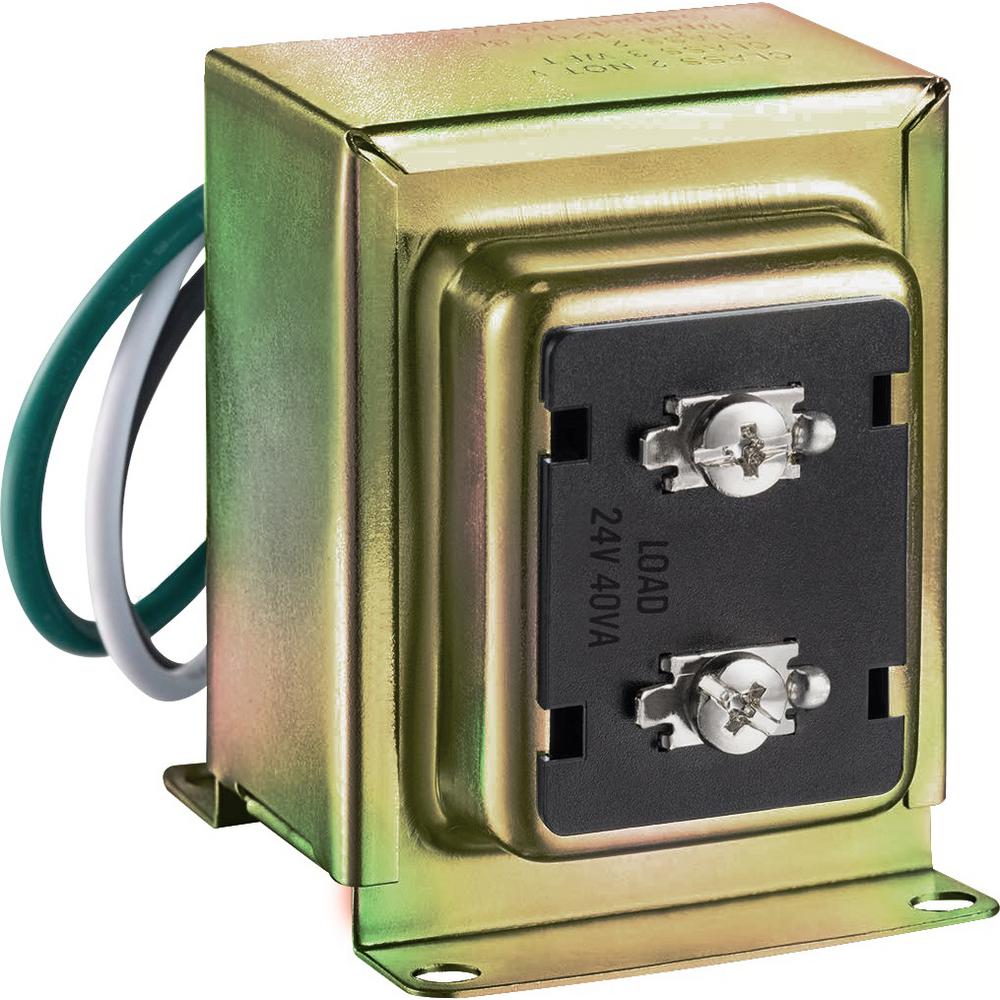 |
| This thing makes 24VAC from 120VAC to power a doorbell. |
 |
| Everyone knows what this is. You can use it all over the world with only a plug adapter. |
Electric cars use robust AC motors that can vary their speed and torque be feeding them variable frequency AC power made possible by relatively cheap, solid state power conditioning.
Batteries have come a long way. When I was a kid, batteries were carbon-zinc and weren't rechargable. A couple of D cells would last only a couple hours in a flash light. Barely long enough for a good game of flashlight tag. Then came alkaline batteries, then Ni-cad rechargeables, then Nickel-metal hydride, and now Lithium-ion.
They have really high power density and can be pretty fast charging.
If you couple these batteries with the solid state power conditioning and control it all with a microprocessor, you have the formula for a successful electric car.
That's fine, but what makes an electric car "better" than a gas of diesel powered one? Two things. Far fewer moving parts. Drastically improved energy efficiency.
Consider the number of moving parts in and engine and transmission - hundreds. Compare that to the number of moving parts in and AC motor - a dozen or so (the rotor, plus the roller bearings to support the rotor's shaft.) Consider the cost to manufacture, machine and assemble an engine and transmission alone. Then add in the complexity of the systems to keep the engine and transmission running - oil pumps, oil changes, etc. Electric propulsion is a clear winner because it's far, far simpler.
Efficiency? Internal combustion engines are heat engines. At full speed and load, an automotive diesel engine can be about 40% efficient, a gas engine about 30% efficient. Laws of thermodynamics regulate this. But, we don't run our car engines at full speed, full load. We run them slower and throttled nearly all the time. Efficiency under these conditions is much worse - perhaps half - thermodynamics, again.
Electricity can be generated from coal fired power plants at 40% efficiency, from combined cycle natural gas plants, at 60% efficiency. Solar and wind have zero fuel cost. Power line losses are typically around 8-15%, so that combined cycle gas power plant delivers electricity to the outlet at roughly 55% net efficiency. The round trip to charge and discharge an Li-ion battery is around 99% - almost negligible. So, where your car is running at 15% net thermal efficiency from a petroleum fuel source, an electric car will be running at over 50% net thermal efficiency from a petroleum fuel source. If your car gets 20 mpg, an identical electric car would get nearly 70 mpg.
An electric car has some other benefits as well.
Better performance. The battery and electric motor can supply full HP over the car's entire speed range. This means mind numbing acceleration at low speed. An internal combustion engine HP varies with speed. A transmission is needed to match engine output to vehicle demand.
Reduced maintenance. No oil changes. No spark plugs. Regenerative braking means fewer brake jobs.
Longer lifespan. With no engines and transmissions to wear out, electric cars can be expected to have much longer lifespans. Some early Tesla fleet owners have gotten over 500,000 miles out of them with few major failures. This will only improve as the state of the art advances.
Technological advances have made electric cars practical replacements for internal combustion powered automobiles. They will only get better and cheaper as the technology continues to mature and evolve. This was happening regardless of climate change, although the rate of change may be accelerated because of it.
All the major auto manufacturers are committed to electric cars. Not because they want to be "nice". But, because they are better.
Wednesday, December 11, 2019
The Hidden Hudson
One thing retired guys do is work on their model railroad. I'm doing that. Right now, I'm trying to extend the scenic portions.
I model Conrail circa 1990 in South Jersey, using an "alternate history" approach that allows a different set of routes to have been selected during the PRSL consolidation and later Conrail rationalization. Here are some pictures:
But, that's not the point of this blog. I happen to have an old, non-powered kit of a NYC J3 Hudson that I assembled a few decades ago. It's a decent looking model, but I've always wondered what to do with it.
Then it hit me and I'm working on the scene....
Here's the back story (Full disclosure - I have no idea how the PRSL deal between the Reading and Pennsylvania actually worked. Nor am I any kind of expert on steam locomotive operation or maintenance. But, this story passes my "smell test" none-the-less, so here it is):
I model Conrail circa 1990 in South Jersey, using an "alternate history" approach that allows a different set of routes to have been selected during the PRSL consolidation and later Conrail rationalization. Here are some pictures:
 |
| Farms and peach orchards are a common sight is South Jersey. WPMI51 heads back to Pavonia. |
 |
| Gloucester (modeled after Pitman) |
 |
| Atlantic City terminal |
 |
| WPCA31 working Gloucester |
But, that's not the point of this blog. I happen to have an old, non-powered kit of a NYC J3 Hudson that I assembled a few decades ago. It's a decent looking model, but I've always wondered what to do with it.
Then it hit me and I'm working on the scene....
Here's the back story (Full disclosure - I have no idea how the PRSL deal between the Reading and Pennsylvania actually worked. Nor am I any kind of expert on steam locomotive operation or maintenance. But, this story passes my "smell test" none-the-less, so here it is):
The Hidden Hudson
In the early 1950s, the New York Central was rapidly phasing
out their steam locomotive fleet. New EMD E-8 diesel locomotives were rapidly
replacing their famous 4-6-4 Hudsons with many going to scrap. At the same time, PRSL was still leaning
heavily on steam, notably Pennsylvania Railroad K-4 and E6 passenger locomotives
that were 20 years older than the NYC Hudsons.
Although they were still serviceable, they were rather old and their
performance with the longer summer trains often left something to be desired. Since
the PRSL was split between the Reading Railroad (RDG) and Pennsylvania Railroad
(PRR), they had to share the cost of the locomotives used by the railroad. The PRR was supplying the bulk of the
equipment and the RDG, was paying them dearly for the privilege of supplying 30
to 40 year old locomotives. If the RDG
had power to spare, they could have chipped in their own power, but they didn’t,
so they paid the PRR.
The Reading Railroad’s Chief Mechanical Officer had a chat with
his New York Central counterpart at a NY Railroad Club Christmas party in
1952. The two agreed it would be worth borrowing
a displaced Hudson to see if it wouldn’t be a good fit for PRSL passenger
service. After all, the PRSL was a flat,
straight, high speed railroad very similar to the NYC and not at all like much
of the Pennsylvania Railroad or Reading.
While they were not the 20th Century limited, the long, seasonal
shore trains operated by the PRSL at speed might just be a good “last hurrah”
for the famous Hudsons. They made a
handshake deal to quietly get a freshly retired Hudson down to the Reading for
the summer.
The PRR might not take kindly to their rival making a buck at
their expense, in their own backyard, so the locomotive was towed to Newberry
Junction where they had an interchange with the Reading. From there, the Reading took it to Reading Shops
where it was put into service, having its NYC markings painted out and the cab
quickly stenciled with road number 220.
It is assumed the Reading did this to try to keep the PRR in the dark
about this test, making it seem, at least on paper, like the latest Reading G3
pacific.
Reading 220 arrived at the PRR’s Camden Terminal Enginehouse
as part of an engine exchange crew on June 13, 1953. The crew at CTE were puzzled by this unique looking
machine. No Wooten firebox. Weird 4-6-4 wheel arrangement. Booster on
trailing truck. They never saw anything
like it before, but had no idea it was a NYC, ALCo built locomotive and certainly
not like the Eddystone, Juniata and Reading products they were used to. They serviced it and assigned it to a 10 car
Atlantic City train.
The train departed Broadway on a Saturday morning with a RDG
road foreman riding along to educate the crew and monitor the performance. The train quickly got up to track speed, and
even a bit more, briefly hitting 87 mph south of Newfield, arriving in Atlantic
City five minutes to the good. The engine
was turned and headed back to Camden with the same train consist at 5:00 pm. The return trip went smoothly with the
locomotive having no trouble accelerating to and holding speed in the low
80.
Disaster struck on the last leg back into Camden. Just past Woodbury running at 70 mph, the
main rod bearing on the right side started smoking. The crew quickly brought the train to a
stop. The conductor and RDG road foreman
hopped off and walked up to call the dispatcher. Knowing that the RDG was still trying to play
coy with their PRR counterparts, the road foreman chatted with the conductor
and they decided to tell the dispatcher they just needed some help getting back
to Camden. He dispatched the second trick
Woodbury yard crew up to tow the train back to Camden.
While they were waiting for the rescue, they cut off the
Hudson and set it out on a rusty siding for a factory that had gone broke during
the depression, 17 years before. The
switch was still there, and although weedy, the spur was still serviceable. The Hudson was tucked away out of sight of
the mainline, the fire was banked and the boiler was blown down. The Woodbury shifter with their ancient PRR
H-8 showed up 20 minutes later, tied on, and the train limped on to Camden at
40 mph.
 |
| On last run. being set out near Gloucester. |
The following Monday, the RDG road foreman debriefed the CMO
in Philadelphia. Getting the Hudson back
on the road would be quite a problem. It
would have been one thing, after a couple of weeks of solid runs to the shore
and back to have the PRR brass discover this NYC locomotive running on the PRSL,
but quite another thing to have this first day failure news get out. So, the plan was to just let things sit for a
while. Besides, they needed to figure
out how to get the locomotive repaired and back on the road. Towing it at low speed back to CTE and then
having them have to get parts from the NYC in Harmon NY would ring too many
alarm bells with PRR folk in Philly, so they decided to see if it could be
repaired on the spur.
The Reading sent a couple machinists over from Port Richmond
to check it out. At best, they would just
need new brass for the bearing. At
worst, the crank pin would need replaced – a job for an engine terminal. They worked for a few hours and dropped the
rod. Bad news - the crank pin was badly scored.
They drained the boiler and tender and dropped
the ashes on the ground. Doing nothing,
at least in the short term, seemed like the thing to do.
Summer turned to Fall and then winter, and the Hudson
sat. Since the NYC had lent a retired
locomotive on a handshake deal, no one at the NYC was looking for it. The Reading CMO would puzzle over it from
time to time. Could they dig a pit and
drop the driver? Whose budget would that
get buried in?
By the time Spring rolled around, the PRSL track department had
gotten permission from their sales department to pull up the switch to the
siding. It was clear no new rail
customer was coming to the site. That
summer, the Reading CMO decided to bite the bullet and get the Hudson towed to
CTE for the repair work. He’d just have
to schmooze his counterpart on the PRR to see if he could keep it relatively
quiet. Maybe a round of drunk golf?
He sent some machinists back down to make sure the locomotive
was otherwise good to tow. When they
reported back that the switch to the spur had been pulled up, he just
sighed. He gave the NYC CMO a quick call
and explained the predicament. They
quickly decided the Reading would write the NYC a check for “locomotive parts”
to cover the scrap value of the locomotive and that would be that. Something never to be spoken about again.
There was nothing to be gained by bringing up the subject,
so the Hudson just sat. Trees and weeds
grew up around the locomotive hiding it’s view from just about any angle. Apartments were built on the old factory site
in the 1970s and a fence along the perimeter of the property kept people from
discovering the hidden locomotive.
Decades went by. There
were rumors of an unaccounted-for Hudson.
Retired, but never scrapped. A
few old heads at Reading Shops recalled working on a NYC Hudson. The PRSL engineers who ran it that one day
told stories of the weird locomotive, but nobody could make any sense of it, or
chalked it up to locomotives being moved to Atlantic City for the occasional
railroad conventions.
Then, in June 1991, some railfans were shooting the new
Amtrak train with the through sleeper and diner from the Broadway Limited in
Chicago, headed to Atlantic City and they stumbled across the rusty
Hudson. They came back a few days later
and cleared some brush to get some pictures of it.
A Hudson saved!
Good news? Maybe. The preservation community is tripping over
each other trying to claim it for themselves.
Meanwhile, no single group has raised enough money to move and stabilize
it, much less make it operable again. Even
figuring out who actually owns it isn’t clear.
Is it the Reading trustees? The
NYC/PC trustees? Since it’s a
locomotive, did Conrail actually have the rights to it? Nobody seems to know. Meanwhile, it sits where it last turned a
wheel, waiting on a savior. |
| Awaiting a savior. |
Subscribe to:
Posts (Atom)