Wednesday, November 14, 2012

"Fair" Taxation

Everybody want taxes to be fair.  Everyone should pay their fair share.  The Prez says, "I want the rich to pay their fair share."  Who doesn't want to be fair?  We have been taught from a very young age to "Play fair."

But, what is fair?

  1. Everyone pays the same amount of tax?  That is, lets say everyone pays $150 - no matter what.  We are all citizens, so maybe we should all pay the same.  That sounds fair.
  2. Everyone pays the same percentage in tax?  That is, I make $1000 and I pay $100 in taxes.  You make $2000, you pay $200 in taxes.  The more you make, the more you pay... It's only fair.
  3. Everyone pays a higher percentage the higher their income.  That is, I make $1000 and I pay $100 in taxes.  You make $2000 and you pay $300 in taxes.  The more you make, the more "extra" money you have laying around, so you can afford to pay even more.  


Each of these could be construed as fair.  But, they are mutually exclusive.  You can only pick one.

Which one is "fair" to you?

Friday, October 26, 2012

The State of the Union - as seen from daytime TV!

I am just getting over the flu.  I watched a lot of TV.  Daytime TV.  Oh, boy.

Even with Comcast's "wonderful" HD lineup and a 42" TV, it was slim picking.  Much to my surprise, I did learn quite a bit.  Here's the summary:


  1. If you have a structured settlement and need cash now, there a whole bunch of nice companies that will "help"you. 
  2. If you have been injured, on the job, in a car wreck or on the job in a car wreck, there are bunch of nice law firms ready to "help" you.  
  3. If you don't have a car, or have a really crappy one, and you don't have any money and you have lousy credit,  there are lots of nice loan sharks companies that will "help" you.
  4. If you have a house and are starving on your Social Security income, Fred Thomson's company will "help" you.
  5. If you need money NOW - and I mean RIGHT NOW, and can't wait until payday, there are lots of loan sharks companies that "help" you out.
  6. If you are diabetic, you can get all kinds of meters, pump, pens, test strips and the insulin from many, many suppliers, all shipped direct to your house and billed directly to Medicare AT NO COST TO YOU!
  7. If are, um, "mobility impaired", you can get one of several motorized scooters, all shipped direct to your house and billed directly to Medicare AT NO COST TO YOU!
  8. If you are overweight, the answer is simple, just send money (usually a lot of it) to one of several companies and they will send you, not-much-food, a machine, magic sprinkles or cool sounding placebos.  Sorry, can't bill Medicare direct for this one.
  9. Christmas is coming.  All kids toys this year have batteries and make noise.  All of them.
  10. If your kids need all those noisy toys for Christmas and you don't have the money now, "help" from Walmart is on the way! Layaway!  
  11. The Man from U.N.C.L.E. Where are they now? Ilya Kuryakin has a nice job working for NCIS as "Duckie", but Napoleon Solo is stuck shilling for a law firm. (See #2)
  12. Deloreans will last forever. There is a show on Velocity by this English guy who doesn't shut up.  He is short and squat. He has a mechanic for a side kick.  He is tall and thin. Think Laurel and Hardy.  Each episode they buy a car and fix it up a bit and resell it.  This episode:  A Delorean.  The guy flies to California, finds a half decent used one - recently resuscitated by the current owner - buys it and has it shipped back to England.  Along the way, we find out many things.  One, this guy REALLY liked Back to the Future. Two, there were only 9000 Deloreans built, but a lot of them are still roaming around, but not many in Europe.  Three, this guy can really talk a lot.  Four, there were parts made for 30,000 Deloreans and one company owns them all - and is selling to owners. They guy bought a bunch of parts to take home with him.  The mechanic did all the work.  The car came out great.  They sold it for a pretty big profit, at a Delorean owners club meeting in England - who knew?  I now know how to change a rear crankshaft oil seal in Delorean (no thanks!).  Also, did you know there was a Delorean in Back to the Future?
  13. Moving wallpaper on TV.  Mecum Auto Auctions are continuously replayed on Velocity - except when the talky English guy is on.  A new car pops up every two minutes.  It's great to watch with a 103 fever.  Not much to comprehend.  I've seen enough Corvettes and Camaros to last a lifetime, now.
  14. I will never get tired of Big Bang Theory reruns, although I still can't shake the thought that it is reality show and I know these people....
I think what I learned overall was this.  

A lot of people are stuck in some sad circumstances and there are lots of "sharks" out there that want to feed off what little they have.  This is very sad.  The time to manage you money is before you need it.  You don't need anyone to "help" you.  Learn a bit and use common sense.  I say this now.  I'll let you know how it works out in a couple decades....I hope.

If Americans ate right and exercised as part of normal living by walking more and driving less, then maybe we wouldn't be in such need of diet pill, exercise machines, hoverround scooters, insulin and a lot of other stuff shipped direct to your house and billed directly to Medicare AT NO COST TO YOU!  I think I'll start by looking in the mirror.

Deloreans were cool.  Particularly at a time when there weren't many cool cars to choose from.  Wonder if that parts store has any spare flux capacitors?

Wednesday, October 10, 2012

The good camera - It's all relative

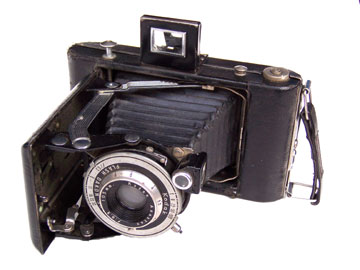
I learned to take pictures on a camera like this one.  Huge, size 620 film.  The negatives were 3-1/4" x 2-1/4", I think.  Eight shots to the roll.  You advanced the film by turning a knob and looking in a window on the back to see when the next frame number appeared on the paper backing of the film.

You had to set the exposure by guessing - using the printed guide that came with the film - or by using a separate light meter.  The shutter only went to 100th of a second.  You had to be very careful taking pictures of moving things.  But, the lens was good and I learned the fundamentals of photography on it.  Even managed some half-decent pictures over the years.

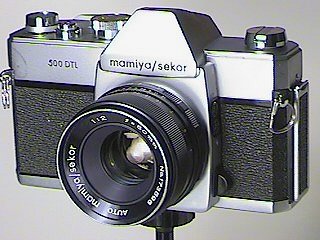
Then, the world changed.  Christmas 1972, I got this neat 35 mm SLR camera.  Within a few years, I added a telephoto and a wide angle lens.


The light meter was built in!  The shutter went to 1/500th!  Interchangable lenses!  35mm film, 36 exposures to the roll!  A year later, I got my driver's licence and I started wandering around taking pictures of everything, but mostly of trains.

Taking train pictures is hard.  They are moving.  Often very fast and you only get one crack at it.  Even with a pretty good background in using a camera, I struggled to get things just right.  Practice and learning from mistakes turned the tide, and after a couple of years, I was getting decent shots.

However, now I have digital camera and life it just too easy. You can post-process your work on a PC and adjust for all the things you did wrong in the field.  You can even take rapid fire multiples and pick the one that looks best to start.  Now the expectation with each shot is "perfect".

Back then, the expectation was "pretty good".  Here is picture from back then.  One of my better ones.

AMTK_2Southern Crescent, July 1977, Princeton Jct. 

This is a good example of the challenge of taking train photos with a manual SLR.
Step zero: Load film in camera. Kodachrome (ASA 64) or "slow" or "fast" Ektachrome. What's the weather like? What's it likely to be when I finish the roll? I think this shot is on ASA 80 Ektachrome.
First step. Select a lens. Zoom? Forget it. Too expensive and not fast enough. Looks like I picked a 135mm fixed for this one. Later, I would buy a 200mm. I really liked tele-wedgies back then. (still do...)
Step 2: Gotta set that shutter speed high because of the long lens and the fast train. Camera went to 500th but I usually tried to get away with something slower so I'd have at least a little depth of field.
Step 3: Set the exposure. You only get one shot at it. Is the scene balanced or not? You have two metering choices - spot or average. Pick one an guess. Would you rather be a little over or under? Under looked better projected (over scans better, but who knew?).
Step 4. Focus. Where will the train be when I push the shutter? How will the shot be framed? How tall is that locomotive? Pick a spot and hope the train fills out the shot like you imagine. You only get one shot and there's no cropping. What you get is what you get.
Step 5: Shoot! Let the train wander into the frame and just at the exact moment - click!
Results: Maybe the shutter speed was high enough. Maybe the exposure was close. Maybe you shot the train right at the spot where you focused. You'll find out when the mailer comes back.
How'd I do on this one? Pretty good. This is pretty much the full frame of what I shot. The exposure was pretty close to dead on. I'd guess this was at 500th at f5.6 or so. Miracle of miracles, I was holding the camera level. (I have trouble with this one....) But, the focus is very slightly off. The center of focus is back closer to the first or second car, leaving the nose of the loco just a bit out. Perhaps I was counting on depth of field greater than what I really had or maybe I misjudged exactly where I wanted the train in the shot. (Anyway, the shot was just fuzzy enough for a RailPicture.net reject.)
Perfect? No. But, pretty good for 1977!